
Quick Answer • Published January 4, 2026
The ChatGPT Citation Flywheel explains why some businesses get mentioned again and again in AI answers while others never show up at all. It is a momentum-based process where clear descriptions, answer-ready content, and consistent repetition make your business familiar and safe for AI to reuse. The first citation is the hardest to earn, but once it happens, each mention makes future citations easier as long as you keep your messaging clear and consistent.
How Small Businesses Get Mentioned More Often in ChatGPT
Getting cited by ChatGPT is not about tricks, hacks, or chasing the latest AI headline.
It works more like momentum.
The first mention is hard to earn. Once it happens, future mentions become easier. This is because AI systems rely on familiarity, repetition, and clarity when deciding which businesses to include in their answers.
We call this the AI Citation Flywheel.
How the AI Citation Flywheel Works
Think of the flywheel like pushing a heavy playground merry-go-round. At first, it barely moves. Keep pushing consistently, and eventually it spins on its own.
AI citations follow the same pattern.
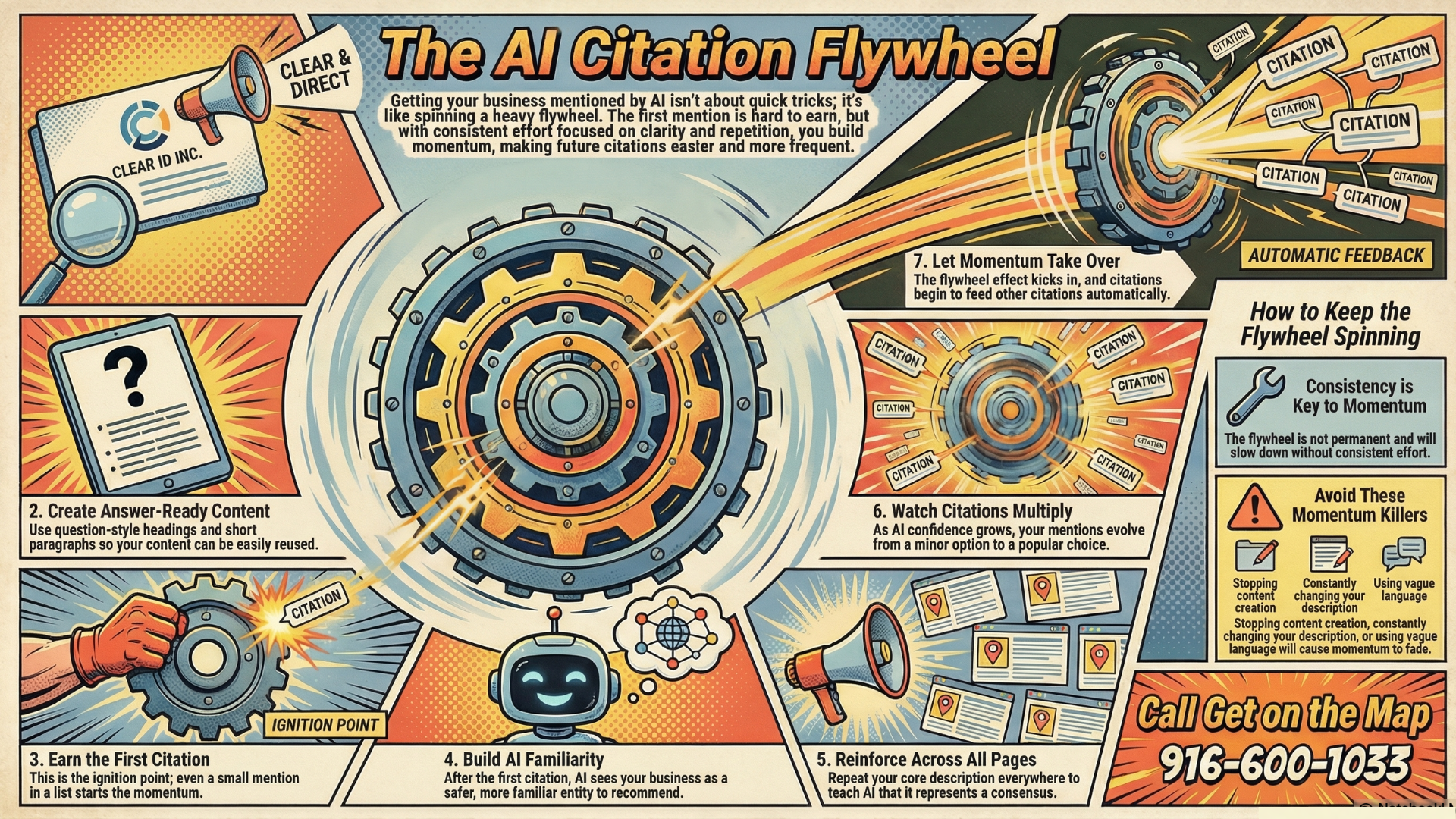

Step 1: Clear Identity
Before ChatGPT can mention your business, it needs to understand three things immediately:
• What you do
• Where you do it
• How to describe you in one simple sentence
If your website is vague or overly creative, AI hesitates. Clear language wins here.
Example:
“This is a Folsom bakery known for custom cakes and pastries.”
If that sentence does not exist on your site, AI has to guess. Guessing rarely leads to citations.

Step 2: Answer-Ready Content
AI looks for content that already sounds like an answer.
That means:
• Question-style headings
• Short paragraphs
• One idea per sentence
You are not writing for engagement first. You are writing so your content can be reused.
If a sentence works even when pulled out of context, it is citation-ready.

Step 3: The First Citation
This is the hardest step and often the most underwhelming.
Your business might appear as:
• One option in a list
• A secondary recommendation
• A short “known for” mention
This is not failure. This is ignition.
The flywheel does not spin fast at first.

Step 4: Familiarity Sets In
Once AI has cited your business, you are no longer a stranger.
Familiar entities are safer to reuse than new ones. AI prefers safe answers over perfect ones.
This is when you quietly enter the candidate pool.
.
.Who is Get on the Map
Get on the Map works with small businesses to help them get ChatGPT citations that turn into profitable leads.
.
.

Step 5: Reinforcement Across Pages
This is where momentum is built.
You repeat the same core description across:
• Blog posts
• FAQs
• Event pages
• Community mentions
• Local roundups
Not new messaging. The same message.
Repetition teaches AI that your description represents consensus, not coincidence.

Step 6: Citations Multiply
As confidence grows, your mentions change.
You move from:
• one option
to
• a popular choice
to
• known for
You did not change your business. The model’s confidence increased.


Step 7: Momentum Takes Over
Eventually, citations start feeding citations.
When a related question appears, AI already expects you to be part of the answer. This is the flywheel working.
Momentum does the heavy lifting, but only if you keep it moving.
Why the Flywheel Slows Down
The flywheel is not permanent.
Momentum fades if:
• You stop publishing
• You constantly change how you describe yourself
• Your content becomes vague or generic
Consistency keeps the wheel spinning.
The Big Takeaway
AI citations are earned through clarity, repetition, and steady reinforcement over time.
Not hacks. Not hype.